
La-Lipo offers a calm, measured approach to localised fat reduction — no surgery, no downtime, no drastic change. Just subtle, intentional refinement that works alongside the way your body naturally functions.
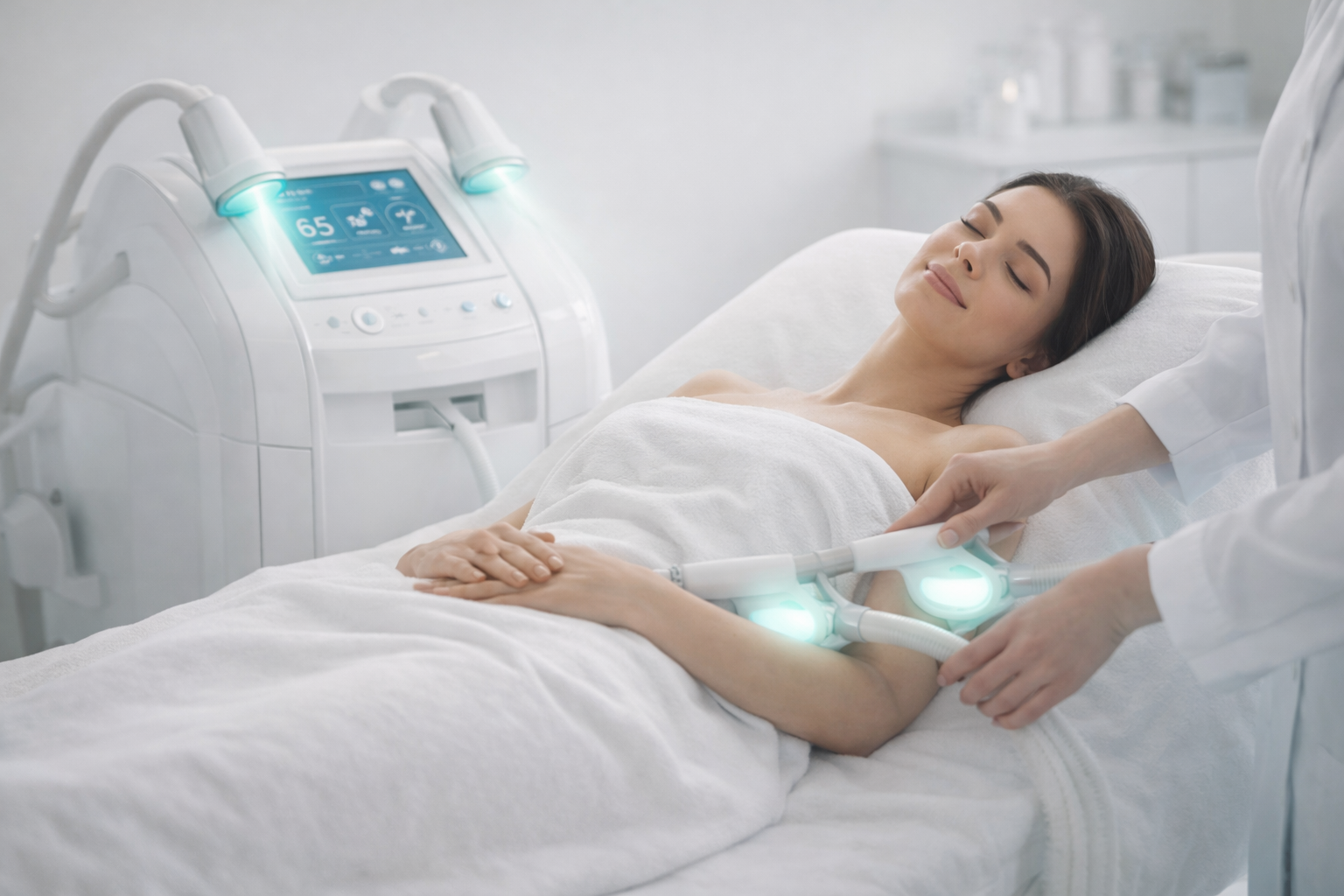
Sometimes the changes we want have very little to do with transformation. They're quieter than that — a small smoothing, a bit less awareness of a particular area, the ability to wear what you want without that nagging thought at the back of your mind.
What you see in the mirror might be "almost right" — and it's that "almost" that matters most. La-Lipo exists for exactly these moments: not to revamp your body, but to gently refine it. It's a choice built on awareness, intention, and a genuine understanding of what helps people feel more at ease in their daily lives.
These are the quiet shifts — how clothing fits differently, how you carry yourself, how you move. Small in scale, but meaningful in lived experience. That's what this treatment is designed to support.
The emotional side of considering any aesthetic treatment is real and entirely valid. Concerns about looking "overdone," questions about safety, uncertainty about outcomes — these aren't doubts to push past. They're starting points for an honest, unhurried conversation.
Real care begins with awareness: understanding your own motivations, your comfort level, and which specific changes would genuinely make everyday living feel easier or more enjoyable. That clarity is worth far more than rushing into anything.
This is not about pressure or persuasion. It's about giving you the information and space to make a decision that feels entirely yours — thoughtful, grounded, and purposeful.

Whether you're exploring non-invasive contouring for the first time or you've already done some research, professional guidance makes a meaningful difference — both in the quality of outcomes and in the safety of the process.
A proper assessment of your health history, current medications, and any implanted devices in or near the treatment area is non-negotiable. Not every individual is a suitable candidate, and that determination should always happen before treatment begins — not after.
Understanding what a treatment genuinely can and cannot achieve is the foundation of a satisfying experience. Professional settings provide the space to ask direct questions and receive plain, truthful answers — including when a particular approach may not be the right fit for your goals.
No two bodies are the same, and no two treatment plans should be either. The placement of pads, the number of sessions, the areas prioritised — all of this is adjusted carefully to your individual anatomy, lifestyle, and goals. A one-size approach simply doesn't apply here.
A professional setting acknowledges that choosing any aesthetic procedure carries an emotional dimension. There's no obligation to decide quickly. Taking time to reflect, discuss, and feel genuinely ready is not only allowed — it's actively encouraged.
Treatment doesn't end when a session does. Professional aftercare guidance, regular check-ins, and the ability to adjust a plan based on how your body responds are part of what makes the overall experience safe, effective, and genuinely supportive.
Understanding that results develop gradually over several sessions — and that individual biology plays a meaningful role — allows you to engage with the process patiently. Realistic expectations set at the beginning tend to produce far more satisfying outcomes in the end.
Understanding the mechanism behind La-Lipo helps set realistic expectations and demystifies what happens during — and after — each session. The process is grounded in your body's own natural biology, which is what makes it so gentle.
Low-level laser energy is delivered through surface pads placed on the skin of the treatment area. There are no needles, no cutting, and no thermal damage to surrounding tissue.
Think of fat cells as small storage containers. The laser gently encourages these cells to open and release their stored contents — the fatty substances held inside — without rupturing or destroying the cells themselves.
Your body's lymphatic system and natural metabolic processes take over. Over the following days and weeks, the released fat is gradually transported away and processed as waste, without any external assistance needed.
The effects accumulate over a series of sessions. Rather than an overnight result, you'll notice a slow, progressive refinement of the treated area — subtle, natural-looking, and proportionate to your overall frame.
La-Lipo is not a weight-loss treatment. It does not tighten loose skin, nor does it produce dramatic sculptural changes. It is designed specifically for small, localised pockets of stubborn fat in individuals who are otherwise close to their ideal weight. Surgical options exist for those requiring greater volume reduction or skin tightening, and a good professional will always signpost this clearly when appropriate.

La-Lipo tends to suit people who have arrived at a steady, healthy baseline and are looking for refinement rather than reinvention. If you've been consistent with balanced eating, regular movement, and good sleep, but there are one or two areas that simply won't respond, this treatment may be worth exploring.
Emotionally, it tends to be a strong fit for those who want to feel more like themselves — not like someone else. The difference matters. Subtle adjustments that align with your existing sense of self tend to support wellbeing far more effectively than dramatic transformations that feel disconnected from who you are.
Practically, the best candidates approach the process with patience. They understand that individual biology — metabolism, lymphatic health, general wellness — plays a meaningful role in how the body responds and how results develop over time.
La-Lipo is not appropriate as a primary intervention for those who would benefit from significant weight loss. It is not designed for radical, rapid transformation, and it will not address loose skin or large areas of excess tissue.
People who are pregnant, those with certain medical conditions, or individuals with implanted medical devices in or near the proposed treatment area should not proceed until they have been reviewed and cleared by a qualified healthcare professional. Safety always comes before any other consideration.
People who report the most meaningful outcomes are generally those who approach La-Lipo as one supportive element within a broader commitment to their own health — not as a shortcut or a single solution. When that framing is in place, the process tends to feel calmer, more achievable, and ultimately more rewarding.
Because La-Lipo uses adjustable surface pads, it can be applied to a variety of areas where localised fat tends to accumulate. Each area presents its own practical and personal considerations, and treatment is always tailored accordingly.
Even with consistent diet and exercise, the lower belly is notoriously resistant. A small softening here can make a meaningful difference in how clothing fits and how comfortably you move through your day. La-Lipo won't replace core training or address post-pregnancy skin laxity, but it can help smooth stubborn fullness and improve the overall silhouette.
Fullness at the sides of the waist can make clothes feel tight and disrupt the visual balance between the torso and hips. La-Lipo targets these pockets with the aim of creating a gentler, more tapered transition — one that allows clothing to sit more comfortably and naturally at the waist.
Inner-thigh fullness can cause chafing and physical discomfort during movement, while outer-thigh fullness can affect the way trousers and skirts sit. La-Lipo can reduce soft bulging and small rolls in both areas, improving both comfort and overall proportion without altering the natural shape of the leg.
Soft fullness beneath the upper arm — sometimes persistent despite regular strength training — can make sleeves fit differently and affect confidence when wearing certain styles. La-Lipo offers a gentle reduction of this area, resulting in a slightly more refined appearance rather than a dramatic reshaping.
Small rolls of tissue around the bra line are a common concern that can be difficult to address through exercise alone. This area responds well to targeted treatment, and softening it can make fitted clothing feel more comfortable and sit more smoothly across the back.
Fullness beneath the chin, often called a double chin, can affect the clarity of the jaw line and the overall proportions of the facial profile in photographs and mirrors. La-Lipo can refine this area gently, producing a slightly cleaner jaw line without any surgical intervention or extended recovery.
One of the underlying principles of La-Lipo is that results should look harmonious with the rest of the body. The approach isn't designed to produce dramatic changes in one isolated area; rather, it aims to create balance between the treated zone and the surrounding tissues. Pad placement and session planning are adjusted carefully to your specific anatomy, ensuring that outcomes feel integrated and natural rather than disconnected from your overall frame.

One of the most important things to understand about La-Lipo is that results are incremental. There's no dramatic before-and-after moment. Instead, changes accumulate quietly across a series of sessions — a gradual refinement that feels like a natural evolution rather than a sudden shift.
This slower pace is not a drawback. For many people, it's one of the most valued qualities of the treatment. It provides the opportunity to assess what's working, to adjust the plan if needed, and to adapt emotionally and practically as clothing begins to fit a little differently and body contours become slightly softer in the targeted areas.
Changes are unlikely to be visually obvious at this stage, but the body has already begun the process of transporting and processing the released fat through its lymphatic system. Staying well-hydrated and gently active supports this early phase.
Subtle changes may begin to be noticeable — perhaps in how certain clothing sits, or in a slightly different feel to the treatment area. These shifts are gentle. A mid-course review with your care team is a good opportunity to adjust the plan if needed.
Results are typically most apparent after a full series of sessions has been completed and the body has had time to fully process the released fat. For most people, the outcome is a subtle but meaningful improvement in how the treated area looks and feels.
Continued healthy habits — balanced nutrition, hydration, movement, and sufficient sleep — play an important role in maintaining the improvements achieved through treatment. La-Lipo works best as part of a broader lifestyle rather than as a standalone intervention.
The most satisfied individuals are those who enter the process with a clear sense of what they're hoping to achieve — and a genuine acceptance that results will be subtle, variable, and individual. La-Lipo is not a guarantee of a specific outcome; it's a supportive tool that, used thoughtfully and consistently, can contribute to a greater sense of ease in daily life.
Individual outcomes depend on metabolism, lymphatic health, hydration, activity levels, and general wellness. These factors are discussed honestly during assessment, so expectations are grounded in reality from the very beginning.
For many people, the experience is less about a visible transformation and more about a quiet accumulation of small, positive shifts — an improved sense of confidence in a favourite outfit, a little less self-consciousness in a particular situation, a slightly more comfortable relationship with a part of the body that previously attracted unwanted attention.
For the vast majority of healthy adults, La-Lipo carries a low risk profile. The energy involved is controlled, delivered through the surface of the skin, and does not involve incisions, internal instruments, or anaesthesia. When performed correctly by trained professionals on appropriately screened individuals, adverse reactions are uncommon.
That said, no aesthetic treatment should bypass proper medical assessment. Safety is not a formality — it is the foundation of ethical practice.
Ethical practice in this area begins with the willingness to say no. If a thorough assessment concludes that La-Lipo is not the safest or most appropriate choice for a particular individual, that should be communicated plainly — along with guidance on what might be more suitable.
Informed consent is not a box to be ticked. It's a genuine exchange — one in which you understand not just what the treatment involves, but what the realistic range of outcomes looks like, what the potential limitations are, and what your role in the process will be.
Individuals who are pregnant, those with certain diagnosed medical conditions, and people with implanted devices (such as pacemakers or metal implants) in or near the area to be treated should not undergo La-Lipo until they have been assessed and cleared by a qualified healthcare professional. This is not a grey area — it is standard, non-negotiable practice.

One of the practical advantages of La-Lipo is the minimal recovery it involves. Since there's no surgical trauma, most people can return to their normal day immediately after a session. That said, a few simple, supportive habits in the days following treatment can make a genuine difference to how efficiently the body processes the released fat.
Adequate water intake supports the lymphatic system — the network responsible for transporting and clearing the fatty substances released during treatment. Increasing your water intake modestly over the 48 to 72 hours following each session is a simple and genuinely helpful habit.
Light activity — a relaxed walk, gentle stretching, or easy household tasks — helps encourage lymphatic circulation without placing stress on the body. You don't need to undertake intense exercise immediately; consistent, easy movement across the day is sufficient and effective.
There's no restrictive diet required. Eating well — lean proteins, vegetables, whole grains, and minimising heavily processed foods — simply supports your body's natural processes and helps maintain the results achieved through treatment. Small, sustainable habits tend to outperform dramatic short-term changes.
The body clears metabolic byproducts more efficiently when adequately rested. Prioritising consistent sleep and managing everyday stress — through brief walks, breathing exercises, or simply quieter moments in the day — supports the recovery and processing phase following each session.
Mild redness, warmth, or temporary tenderness at the treatment site is entirely normal and typically resolves quickly. If you notice anything more persistent — prolonged pain, unusual swelling, or any other symptom that concerns you — seek medical advice promptly. Basic safety awareness applies here just as it would with any healthcare procedure.
Scheduled follow-ups allow your care team to monitor progress, answer questions, and adjust the plan if the body is responding in a particular way. Pausing to reassess after several rounds is a perfectly reasonable and encouraged part of the process — this is collaborative, not prescriptive.
These accounts reflect a range of individual experiences. Results, timelines, and sensations vary from person to person. They are shared here to give a genuine sense of what the process tends to feel like — not to suggest any particular outcome.
I'd been running consistently for three years and eating well, but there was still this softness around my lower abdomen that wouldn't shift. After a course of La-Lipo, the difference was subtle — but it was exactly the subtle I was looking for. High-waisted clothing stopped feeling like something to avoid. That felt significant to me.
I was nervous about looking "done" or unnatural. What I found was the complete opposite. The changes happened so gradually that even I almost didn't notice them at first — but they added up. My jaw line looks a little softer and cleaner. My partner noticed before I'd even mentioned I was having treatment. That felt like the right kind of result.
What surprised me most was how easy the sessions were to work around. I'd go in, lie there for half an hour, and walk straight back out. No recovery, no disruption. The results took time, but I appreciated that. It felt like something I was doing with my body rather than to it.
The way care is delivered matters as much as the treatment itself. Every aspect of the process — from the initial conversation to the final follow-up — is guided by a set of principles that put your safety, comfort, and genuine interests first.
Care begins with listening. The first step is always an open, honest discussion about what you want to achieve, why you're considering treatment, and whether La-Lipo genuinely aligns with your goals and health profile. This is not a sales conversation — it's a foundation for an informed decision.
Every person is different, and every assessment reflects that. Medical history, lifestyle factors, and the specific area of concern are all considered carefully. This process exists to determine whether treatment is genuinely appropriate — and to design a plan that fits your specific anatomy and goals if it is.
Clear, plain-language explanations are provided throughout. Questions about the science, the safety, the likely outcomes, and the limitations of the treatment are welcomed at every stage. When something is uncertain or cannot be predicted, that is shared honestly — because informed decisions are worth far more than assured ones.
There is never any pressure to commit quickly. Taking time to reflect, speak with family, compare options, or simply sit with a decision is not just acceptable — it's actively encouraged. The process should fit your rhythm, not the other way around.
Treatment is planned with care and precision. Pad placement, session timing, and the areas addressed are arranged to maintain natural proportions and avoid anything that feels disconnected from your overall frame. A preference for gradual, conservative change over sweeping intervention is built into everything we do.
Change — even gradual, positive change — can come with unexpected emotional responses. That's entirely normal. Time is built in for questions throughout the process, and follow-up is clear, direct, and genuinely supportive. You should feel respected and informed at every step — not just during sessions.

Deciding whether La-Lipo is right for you is a process worth taking seriously. There's no urgency, and there shouldn't be. A good decision emerges from honest reflection, access to clear information, and a genuine understanding of what you're hoping to achieve.
The following considerations are worth working through at your own pace before beginning a conversation with a professional team.
Clarify your goal. Is what you're hoping for something La-Lipo is genuinely designed to achieve? Small, localised refinement for those close to their ideal weight — or something that calls for a different approach altogether?
Consider your current health baseline. La-Lipo works best as a complement to healthy habits already in place. If lifestyle changes are still the primary opportunity, that's worth addressing first.
Think about your expectations. Results are gradual and individual. If you're hoping for a dramatic, rapid transformation, this treatment is unlikely to deliver that — and any honest professional will tell you so.
Reflect on your readiness. Not just physically, but emotionally. Are you exploring this from a place of genuine self-care, with realistic hopes and a steady mindset? That tends to produce the most satisfying outcomes.
Ask your questions. Make a list. There are no questions too basic or too detailed. A professional worth working with will welcome all of them.
Coming to an initial assessment with some clarity about what specifically bothers you, which areas you'd like to address, and what "a good outcome" would look like for you personally — makes the whole process smoother and more productive.
It's also worth noting any health conditions, medications, or medical devices you have or use — even if you're unsure of their relevance. Your care team will assess this carefully, but the more complete the picture you bring, the safer and more tailored the assessment can be.
And if you're still unsure after a first conversation? That's completely fine. Taking more time is not a sign of indecision — it's a sign that you're approaching this thoughtfully. That's the right approach.
✦ There is no obligation attached to a first conversation. It's an opportunity to gather information, ask questions, and form your own view — at your own pace, without pressure.
Whatever brings you to consider La-Lipo — a stubborn pocket that won't shift, a silhouette you'd like to see soften, a wish to feel a little more comfortable in everyday situations — the decision belongs entirely to you.
The right choice should leave you feeling more confident, more informed, and more at ease — not pressured, not rushed, and not sold to. That's the standard this treatment should be held to, and the standard that good care always meets.
When treatment, lifestyle, and personal readiness come together in the right way, the experience tends to be calm, grounded, and — for many people — quietly rewarding. That's the goal: soft, purposeful, and in genuine harmony with how you want to be living your life.